You're receiving this because you're in my network — feel free to unsubscribe if this isn't relevant, or forward it to someone who would love it. Read online. |
Do you know what your appointment recheck rate actually is? |
The real one. Pulled from your practice management system, calculated across every discharge last month. Most clinic owners don't know, and that gap in visibility is costing them more than they realise. |
|
What counts as a recheck opportunity? |
A recheck isn't just a post-op wound check. It's the dermatology case you discharged on a new shampoo protocol. The vomiting dog sent home on a bland diet. The senior cat whose bloodwork flagged something borderline. The puppy that had her first vaccine and an owner who, beneath the smiles, had a dozen anxious questions she didn't want to take up your time with. |
Every single discharge is a follow-up opportunity. Not because every case will have a complication — most won't. But because no two patients recover in the same home environment, with the same owner, at the same pace. You can't know which case needs a call until you make the call. |
The benchmark recheck rate at practices with structured follow-up systems sits between 30–35%. The industry average without one? Around 5%. |
That 25–30 percentage point gap is the revenue leak. |
|
The back-of-napkin calculation |
Here's the framework. Plug in your own numbers. |
Monthly discharges: X Expected recheck rate (structured follow-up): 30% Actual recheck rate (ad hoc or none): 5% Gap: 25% of discharges not returning Average recheck visit value: ~$150 Monthly revenue gap: X × 0.25 × $150 |
|
|
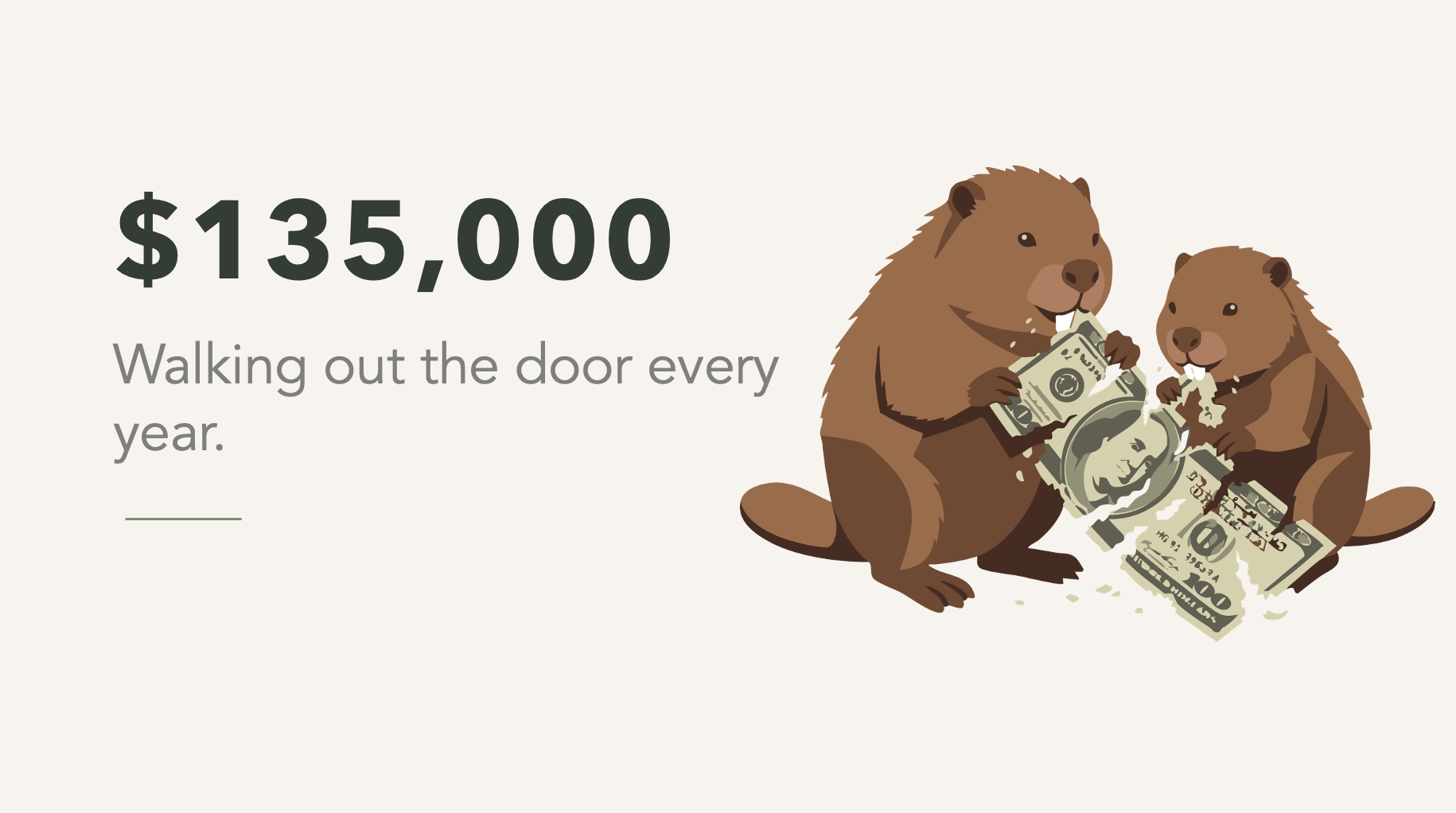
For a clinic seeing 300 discharges a month, that's $11,250 walking out the door every single month, and $135,000 over the course of a year, from one metric, at one clinic. That figure doesn't include medications dispensed at the recheck, or the diagnostic workup for the case that caught a complication early, or what happens to client lifetime value when someone feels genuinely cared for after their pet comes home. |
|
The number your accountant isn't showing you |
Here's the part that tends to hit hardest: the recheck revenue gap isn't even the biggest number. |
The average veterinary practice spends 2–5% of gross revenue on marketing to acquire new clients. For a $1.5M practice, that's up to $75,000 a year to bring people through the door. And yet acquiring a new client costs five times more than retaining an existing one. |
When a client doesn't hear from your clinic after a discharge, they don't necessarily go looking for another vet immediately. But they notice. The absence of follow-up is felt — quietly, without complaint. And over time, it's one of the most consistent drivers of client lapse. Industry data shows that 20% of veterinary clients are considered lapsed — defined as not visiting in 18 months. That's 1 in 5 of your clients slowly drifting away, often without you ever knowing why. |
A client with an average annual spend of $622 and a relationship lasting 8–10 years represents close to $5,000–6,000 in lifetime value. You don't lose them all at once. You lose them in the silence. |
|
Why it happens — and why it's not your fault |
This is not a motivation problem. The vets I speak to are among the most conscientious professionals I encounter. Many of them tell me they'll be on the way home and suddenly think: how's that dog doing? The one on the new arthritis protocol. Did the owner actually change the diet? |
But they get back to the clinic the next morning, and there's a full schedule waiting. The thought dissolves. Not because they stopped caring — but because the system gives them no mechanism to act on it. |
The receptionist can send a text, and some clinics try. But a meaningful follow-up call for a complex discharge isn't the same as a check-in message. The questions should be medically specific. The timing should match the case — not the next day for everything, but 48 hours for post-op, a week for a dermatology case, ten days for a patient on a new medication. That kind of structured, case-specific follow-up requires clinical judgment. And there are only so many hours in a vet's day. |
This is a systems problem. Not a staffing one. |
|
What changes when every discharge gets a follow-up |
When follow-up is consistent and case-appropriate, three things happen at once. |
Clinical outcomes improve — complications get caught earlier, medication non-compliance gets flagged before it becomes a crisis. Recheck revenue recovers — the gap narrows because clients who feel cared for book the appointment you recommend. And retention compounds. The client who got a call three days after discharge doesn't just come back for the next recheck. They come back for everything. They refer their neighbours. They stay for years.
|
You can grow a practice by spending more on marketing. Or you can grow it by losing fewer of the clients you already have. |
The math on the second option is considerably better. |
|
Practice Forward is published by Nidana Loop — AI-powered follow-up for veterinary clinics. Curious what a structured follow-up system looks like for your clinic? Book a demo. |