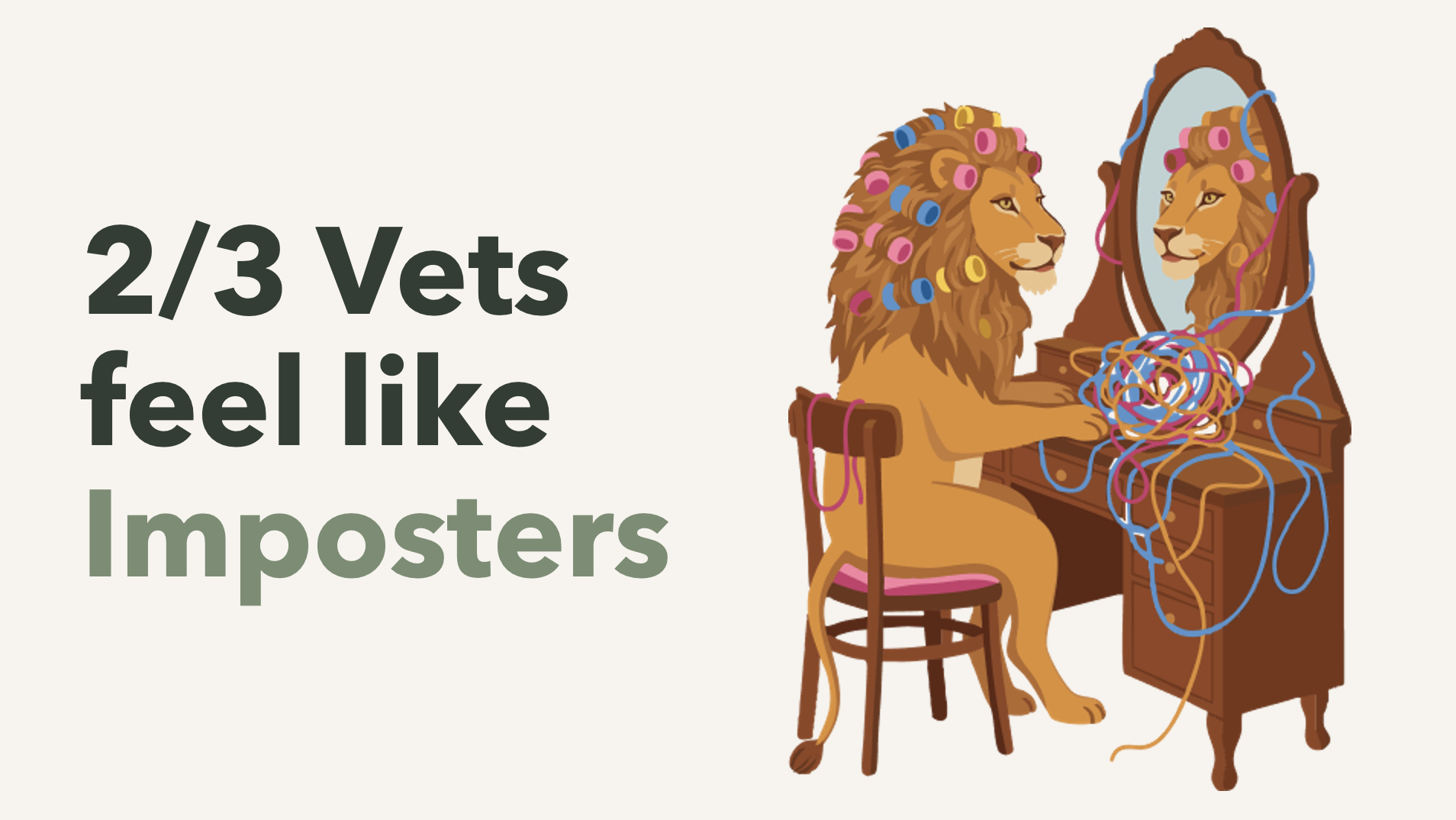
Ninety-eight percent of veterinarians say they take pride in doing a good job. Sixty-eight percent score at or above the clinical cutoff for impostor feelings. Those two numbers describe the same people. The gap between them is one missing piece of information, the same piece for almost every patient a clinic treats: whether the treatment actually worked. | The patient leaves, and for most cases the story goes dark. Human medicine has at least measured this. When 231 emergency physicians were surveyed about outcome feedback, 97 percent wanted more of it, they were getting it on roughly one case in ten, and they estimated that more than half of the outcomes that mattered happened after the patient left their care. The paper took its title from one respondent: "I never hear what happens, even if they die." Veterinary medicine has never run that survey. The answer is assumed. | Human medicine built its feedback loop because the bill forced it. Readmissions cost payers money, hospitals were penalised for them, and the post-discharge call got its own billing code. None of that scrutiny ever reached veterinary medicine. Nobody can charge for the call, and after a full day of appointments nobody has the hands to make it. So the profession learned to live without the information, and learned to call that "no news is good news." | What doctors get instead | Two channels carry whatever feedback does arrive: the bottom line, and Google reviews. Both are broken for this purpose. The bottom line reports on years of work at once and says nothing about Tuesday's spay. Reviews are a barbell. The delighted write them and the furious write them; the large middle, the owner whose dog recovered fine and who had one question nobody asked, never does. Debbie Boone, a CVPM who has worked in and around veterinary practices for 41 years, put the result plainly: "They just go out in the world and disappear. It's no news is good news, but is it really?" | Three kinds of feedback | Feedback after discharge comes in three kinds, and they do different jobs. | The thank-you changes how a doctor feels. The count, how many of this month's recoveries went cleanly, changes how confident a doctor is. The pattern, what keeps going wrong at home and why, changes how a doctor practises.
| The follow-up call most clinics make, where one exists, catches the first by accident and the second never. The pattern is the subject of the next issue. This one is about the two that reach the person. | Why the first two matter | When 273 veterinarians were asked to finish the sentence "I derive pleasure from my work as a veterinarian when," positive patient outcomes were among the most frequent answers, relationships with pet owners came up more often than relationships with animals, and the authors' summary was that a simple thank you matters. Studies of nurses and resident doctors find the same from the other direction: gratitude from patients is linked to lower emotional exhaustion and a stronger sense of accomplishment. Set that against where the profession sits. Sixty-one percent of veterinarians report exhaustion, against 32 percent of the general population, and fewer than half believe their colleagues are satisfied with their careers. | The count works on confidence the way the thank-you works on mood. Boone again: "If I'm getting statistics from every spay I did and it says 99.9 percent are recovering well, does that build my confidence as a doctor? Absolutely." The impostor research agrees. People with impostor feelings struggle to accept praise and put their successes down to luck. Reassurance does not reach them. Evidence does, and evidence is exactly what a clinic that never hears back cannot give its doctors. | Hearing both sides | Post-discharge monitoring, where a conversational AI reaches every discharged patient's owner and asks about the recovery from the doctor's own record, hears both sides. It hears the flags: the tablet that was stopped, the incision redder than it should be. It also hears the owner who says the treatment worked like a miracle and asks that the doctor be told. Today that sentence is said in a kitchen and travels no further. Monitoring carries it back, with the clean recoveries counted alongside the problems, and none of it costs the doctor an hour on the phone. That is what Nidana Loop does. A doctor's work goes out into the world every day. For the first time, the world can answer. | Next issue: the third kind of feedback, the pattern, and why a stack of "called, doing well" notes will never show one. | Curious what post-discharge monitoring looks like for your clinic? Book a 20-minute demo at nidana.io. |
|