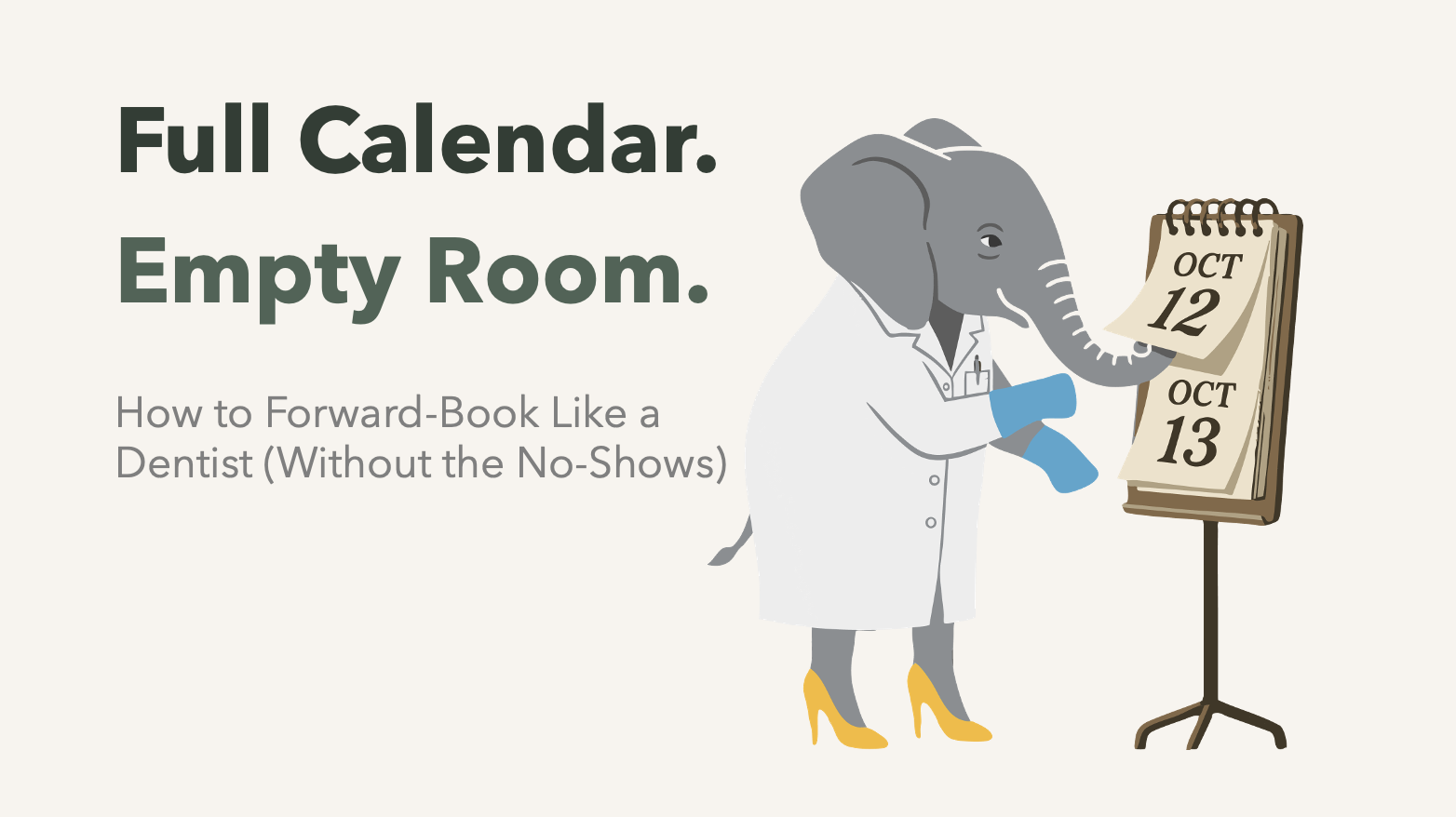
Two practice owners told me the same thing this month, almost word for word. They are pushing their front desk to book a follow-up appointment for nearly every patient that walks out the door. The dentistry model. Every patient leaves with their next visit on the calendar. | I understand exactly why. Industry visit volumes have been soft for years, and most of the revenue growth practices are seeing is coming from price increases, not from more patients coming through the door. You can only raise prices for so long. At some point the only durable growth lever left is getting more of your existing patients to come back. Dentists solved that problem decades ago, so it is the obvious playbook to borrow. | Here is my honest take: steal it. But only half of it. Copied blindly, the dentistry model will fill your calendar with appointments that never happen. | Why the dentistry model works | The dental numbers are genuinely impressive. Dental practices aim to have around 75 percent of patients scheduled in advance, against roughly 11 percent of veterinary hospitals that forward-book their six or twelve month checkups. And the mechanism behind it is measurable. Patients whose recall visit was booked before they left the chair no-show or cancel at a rate of 8 to 12 percent. Patients who were told "we'll call you to schedule" miss at 22 to 30 percent. The booking moment itself is the intervention. A slot on the calendar is a commitment. A promise to schedule later is a coin flip. | So when a client is standing at your desk and their pet genuinely needs to be seen again, booking it before they leave is simply correct. No argument from me. | Why it doesn't fully translate | Here is what the dentists have that you don't: certainty. A dental recall is one kind of appointment. Everyone needs a cleaning, the interval is standard, and no clinical judgment is required to know the visit should happen. The entire model rests on that. | Now think about what "come back" actually means at a veterinary discharge. It means three different things, and they behave completely differently. | Sometimes it is a date. Suture removal on Thursday. A progress exam on the ear infection in two weeks. These are the dental cleaning of vet med, and they should be booked before the owner reaches the parking lot, every single time. | Sometimes it is a horizon. The next vaccine dose, the senior wellness exam, six months out. Booking these works too, but with a catch I will come back to. | And very often, it is a condition. "Come back if he's not improving." Nobody, including the doctor, knows on discharge day whether that visit should exist. It depends entirely on how recovery goes at home. | The dentistry model has no answer for that third category, because dentistry doesn't have a third category. And it is the biggest one on your schedule. | What happens when you book blind | The evidence on this is uncomfortable. Across 51,000 appointments at one outpatient clinic, appointments booked zero to two weeks out no-showed at 9 percent. Booked six months out, the same clinic's no-show rate was 38 percent. In pediatric specialty clinics, appointments made more than 30 days ahead missed at double the rate of those made inside 30 days. The further from today you place an appointment, the less real it becomes. | I have watched the veterinary version of this play out inside clinic systems. A wellness visit gets booked six months ahead. Six months later, an automated reminder goes out: you have an appointment Tuesday. By then the owner has forgotten why it exists. The receptionist has forgotten too, so when the owner calls to ask, nobody can make the case for the visit. The appointment quietly dies. The slot it was holding died with it. | Book a conditional recheck "just in case" and you get the worst of both worlds. If the pet recovers, the owner cancels, or worse, doesn't. If the pet doesn't recover, you got lucky. Either way you are managing a calendar full of appointments that were guesses on the day they were made. And your front desk, already losing a fight with a ringing phone, now owns the reschedule churn. | There is one more problem with "book everything" as a policy, and it is quieter. Owners are not medically trained. When a booked recheck approaches and the pet "seems fine," many will skip it, without any way of knowing whether fine is true. A distended abdomen, pale gums, a healing incision that isn't. These are not things most owners can read. The booking didn't protect the patient. It just moved the guess from your calendar to their kitchen. | The version that works | So here is the model I would actually steal, in three parts. | Book the certain ones on the spot. If there is a date, it goes on the calendar before the owner leaves. Language matters here: "recheck" sounds free and optional to clients, so call it a progress exam, say the patient needs it rather than that you recommend it, and offer two slots rather than asking whether they'd like one. "Dr. Carter needs to see Leo in two weeks for a progress exam on the ear. Tuesday morning or Thursday afternoon?" | Give the long-horizon ones their memory back. Six-month bookings are fine if the reminder carries the story. Not "you have an appointment Tuesday," but a real touch point that says why: you came in six months ago for this, the appointment exists for this reason. Context is what keeps a distant booking alive. | And for the conditional ones, don't book. Ask. Following up with every patient a few days after discharge tells you which recoveries are on track and which aren't. Then you book the rechecks that recovery has actually earned, a few days out, when the appointment is real, the reason is fresh, and the owner shows up. You get the revenue without the no-shows, and the patients who needed to come back are the ones who do. | That last part is the workflow we built Nidana Loop around. Loop follows up with every discharged patient, and because roughly 18 percent of completed follow-ups surface a genuine clinical concern, it tells you exactly which conditional cases have turned into real rechecks. It also protects the bookings you already have: before a scheduled progress exam, Loop checks in with the owner, reinforces why the visit matters, answers their questions from the patient's actual record, and hands your vet a picture of what happened at home before the patient is on the table. | The dentists were right about the booking moment. They just never had to answer the question your clinic answers thirty times a day: does this patient need to come back at all? Follow-up is how you find out. | Curious what that looks like for your clinic? Book a 20-minute demo. |
|